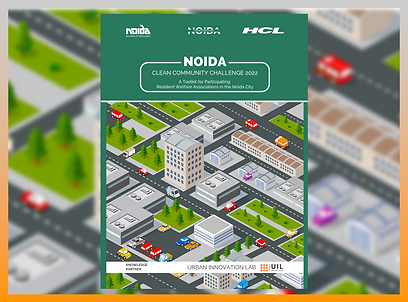
The HCL Foundation has embarked on a collaborative venture with the Noida Authority to spearhead the Clean Noida project. This initiative is focused on enhancing urban sanitation within Noida by developing and executing strategies for better management of solid and liquid waste, coupled with efforts to drive behavioral change across urban and rural segments.
Since 2018, the client’s team has been actively engaged across 69 urban villages and numerous RWAs and AoAs. The primary activities revolve around solid waste management, community mobilization, and promoting behavioral transformation.
The latest endeavor is a cleanliness drive across RWAs to deepen their engagement in Solid Waste Management (SWM) activities. HCL Foundation appointed UIL as Knowledge Partner to devise and oversee implementation of this campaign.
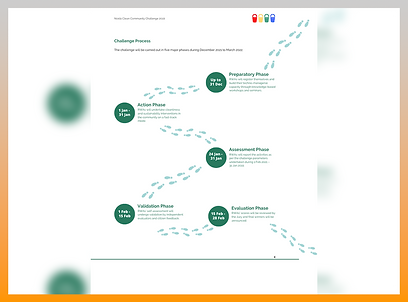
Pre-Campaign Stage
Framework development and detailed roadmap preparation.
Content creation for brochures, presentations, and participation forms.
Stakeholder identification and role definition.
Formation of administrative and management committees.
Coordination with planning and implementation entities.
Campaign Stage
Facilitation of RWA participation.
Technical support for stakeholder engagement.
Training sessions on data collection.
Data review, interpretation, and reporting.
Digital media and event content curation.
Post-Campaign Stage
Strategic guidance for jury organization.
Compilation of comprehensive project outcome report.
The project aimed not only to improve sanitation infrastructure but also to influence long-term behavioral change toward sustainable urban living.
Services Provided
UIL conducted a comprehensive assessment of existing solid and liquid waste management initiatives led by HCL Foundation. This included comparative analysis of sanitation ranking frameworks such as Swachhata Survekshan, Garbage-Free City ratings, and Water-Plus certifications. A strategic framework was developed integrating sustainable waste management principles at neighborhood level, incorporating insights from 60+ RWAs and AoAs.
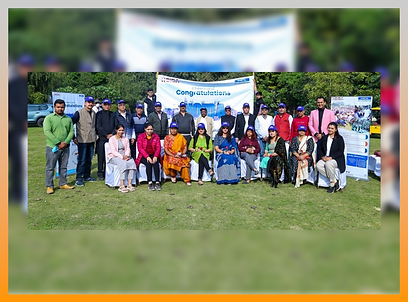
Rewards and Recognition
Top Performers: Three highest-scoring RWAs recognized.
Category Performers: Infrastructure, Service Delivery, Community Engagement, Governance, and Sustainability Champions.
Participation Prize: Recognition for all eligible participants.
Top performers and category leaders were further supported through a three-month mentorship program led by HCL Foundation.
Evaluation Methodology
Self-Assessment (1000 marks): RWA evaluation against predefined parameters.