
Innovate Urban
Driving Impact Through Consulting & Communications
NuSocia
Editing and Graphic Design of COVID-19 Relief Evaluation Report
India
Content Writing and Creative Design


About The Project
Amidst the global disruption caused by COVID-19, Tata Steel Foundation (TSF) undertook strategic interventions to mitigate the pandemic’s impact across West Bengal and Jharkhand in 2022. As the community-focused arm of Tata Steel, TSF implemented multifaceted relief and rehabilitation initiatives aligned with its broader CSR mandate and long-term community development vision.
Organizational Profile
TSF, a Section 8 company, represents Tata Steel’s commitment to social transformation. With over 1,000 personnel across 11 operational units in Jharkhand and Odisha, the Foundation reached nearly 3 million lives in FY23. Its work spans public health, education, livelihoods, gender inclusion, community enterprise, infrastructure development, and tribal identity preservation. With an allocation of ₹500 crores under its Impact and Enterprise pathways, TSF integrates climate resilience, ecosystem restoration, and sustainable livelihoods into its programming framework.
Strategic Response to COVID-19
Under its #CombatCovid19CSR initiative, TSF provided critical medical equipment, institutional support, and financial assistance to healthcare workers and charitable organizations. Notably, the Foundation initiated relief measures proactively—even prior to formal appeals—demonstrating agility and preparedness in crisis response.
Ten-Point Action Plan
In March 2022, TSF launched a comprehensive ten-point action plan addressing immediate and medium-term community needs. Initially funded internally and later supported by corporate and individual contributions, the interventions included:
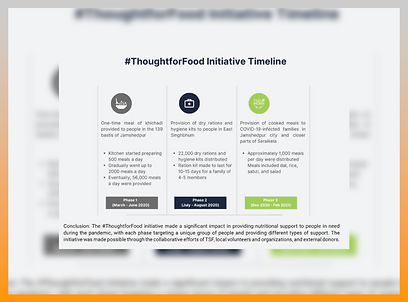
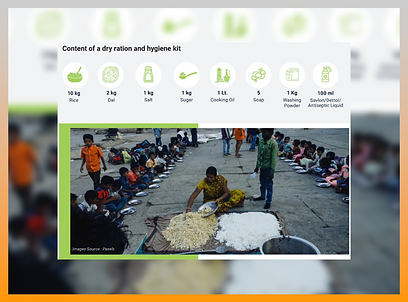
- #ThoughtforFood: Nutritional and food security support.
- #CashforWork: Short-term livelihood and employment generation.
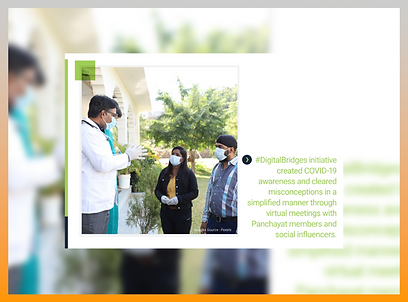
- #DigitalBridges: Digital awareness and outreach initiatives.
These actions collectively strengthened healthcare access, food security, and economic resilience among vulnerable communities.
Impact Evaluation Methodology
The impact assessment was conducted by NuSocia using a qualitative approach based on the OECD-DAC “REECIS” framework. The evaluation examined relevance, effectiveness, efficiency, coherence, impact, and sustainability of TSF’s interventions, ensuring alignment with CSR principles and beneficiary needs.
Key Findings
TSF’s interventions reached over 9,00,000 beneficiaries, addressing healthcare gaps, ensuring food security, and promoting inclusive relief mechanisms. The assessment highlighted the Foundation’s operational efficiency, policy alignment, and contribution toward long-term community resilience.
Recommendations
The evaluation recommended strengthening collaboration with government agencies, integrating mental health support services, expanding remote healthcare solutions, aligning product-based initiatives with market demand, and institutionalizing structured emergency preparedness frameworks for future crises.
Services Provided
Urban Innovation Lab (UIL) was appointed as the communications and design agency for Tata Steel Foundation’s COVID-19 impact documentation. UIL’s mandate was to translate the findings of NuSocia’s evaluation into a technically rigorous, visually compelling, and stakeholder-friendly report.
Strategic Communications
UIL developed a structured narrative articulating the depth and breadth of TSF’s pandemic response. By synthesizing evaluation findings, policy alignment, and impact metrics, the agency ensured the report effectively communicated strategic intent, implementation efficiency, and measurable outcomes while maintaining data integrity.
Design and Visualization
UIL transformed complex programmatic data into accessible visual formats through infographics, charts, and structured layouts. The design approach enhanced readability, simplified technical analysis, and elevated the overall presentation quality of the report.
Technical Content Development
The content strategy incorporated detailed analysis aligned with the REECIS framework, ensuring technical accuracy while maintaining engagement. This balanced approach strengthened the credibility of the documentation and reinforced TSF’s leadership in crisis-responsive CSR initiatives.
Outcome
The final impact report emerged as a comprehensive and professionally designed document accurately reflecting the scope and effectiveness of TSF’s COVID-19 response. UIL’s integrated communication and design expertise enhanced stakeholder engagement and positioned the initiative as a benchmark for corporate disaster-response frameworks.